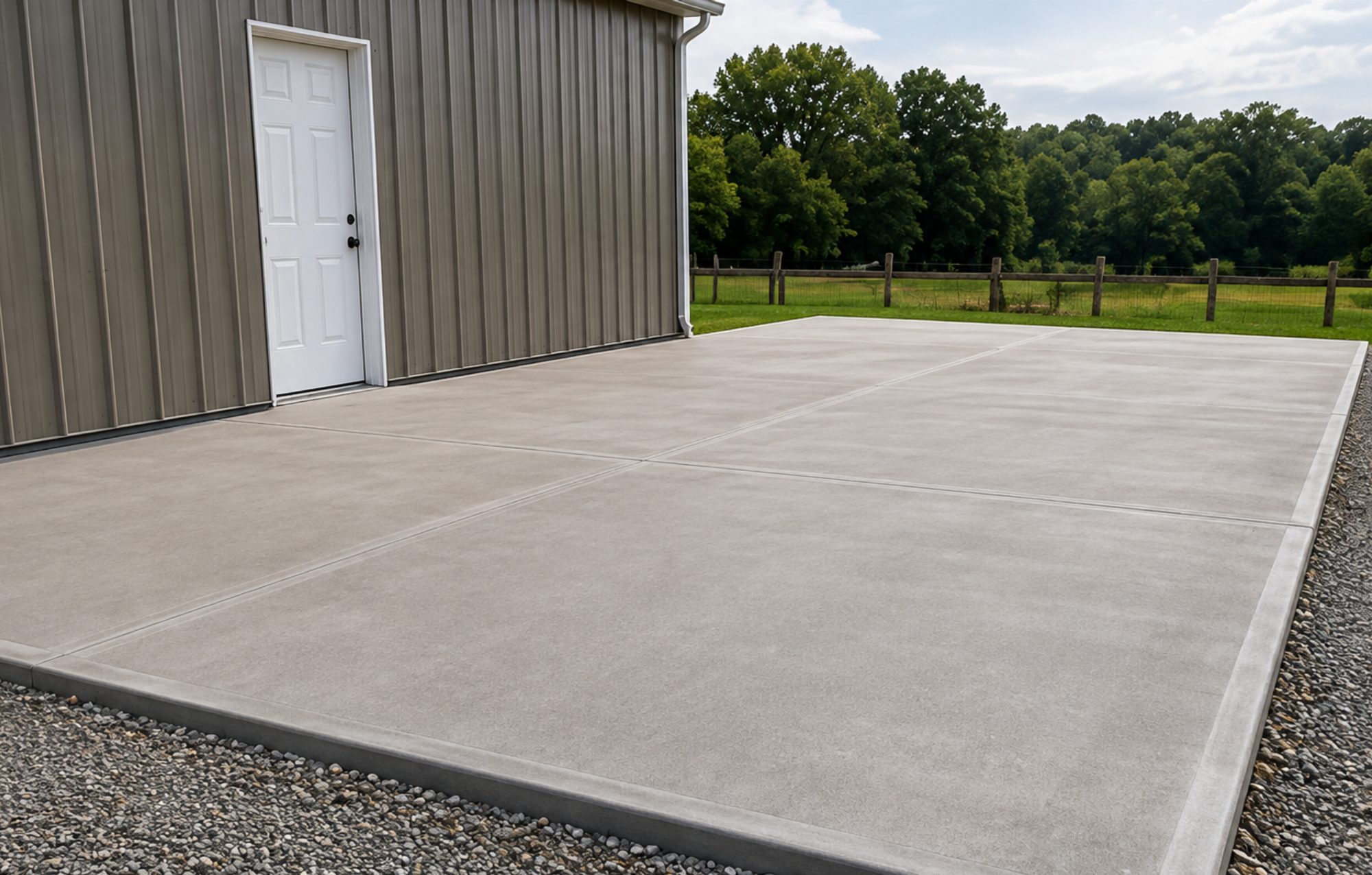
Garage & Basement Concrete Floors in Winston-Salem, NC
Garage floors are priced per square foot. A single garage is commonly 12 by 22 at about 264 square feet, a double 24 by 24 at 576. Both get a vapour barrier under the slab and 4 inches of concrete over a compacted base. If an existing slab has to be broken out and hauled off first, that adds roughly 15 to 25 percent to the job.
Interior slabs live or die on the vapour barrier and the base. Any slab that will be enclosed and heated needs a barrier under it, or ground moisture wicks up through the concrete and takes out flooring, stored items, and anything wooden sitting on it.
What Moves the Price of Garage & Basement Floors in Winston-Salem, NC
What changes
Effect on your price
Square footage
The single biggest driver. Work is priced per square foot, so measure before you call.
Vapour barrier under the slab
Required under anything enclosed. It is a small line item at pour time and impossible to add afterwards.
Slab thickness
4 inches is standard. Going to 5 or 6 inches for heavy vehicles adds material across the whole pour.
Reinforcement, wire or fibre
Adds roughly 10 to 15 percent over a plain pour. Worth it anywhere a vehicle or a heavy load will sit.
Tear-out of the existing surface
Adds roughly 15 to 25 percent, depending on slab thickness and how easily a machine can reach it.
Floor drain and pitch
A drain means pitching the whole floor to it, which is layout and screed work on top of the plumbing.
Getting concrete inside
A basement or an attached garage often cannot be reached by a chute, so it goes in by pump, buggy or wheelbarrow. That is labour, and it is why interior slabs price above exterior ones of the same size.
Every job is priced on site. We measure, check the base and the grade, and put a written price in your hand before any concrete is ordered.
What's Included
Vapour barrier under any enclosed or heated slab
Compacted base graded flat, or sloped to a drain where specified
Thickness and reinforcement sized to actual vehicle or equipment load
Power-trowelled or broom finish depending on how the space is used
Control joints placed to manage shrinkage cracking
Apron tie-in at the garage door threshold
When to Call
The garage floor has cracked, heaved, or is spalling badly
You are converting a carport or dirt-floor outbuilding
Moisture is coming up through an existing slab
You want a smoother finish ready for an epoxy or coating later
Common Questions
How thick should a garage floor be?⌄
Four inches is standard for cars and light trucks. Six inches with reinforcement is normal where a lift, heavy equipment, or an RV will sit on it.
Do I need a vapour barrier?⌄
For any slab that will be enclosed and heated, yes. It stops ground moisture wicking up through the concrete into flooring, framing, or stored items.
Can I put epoxy on a new slab straight away?⌄
No. New concrete needs to cure and release moisture first, typically around 28 days minimum, and the surface has to be prepared. Coating too early is the most common cause of epoxy peeling.